Making Better Climate Bets
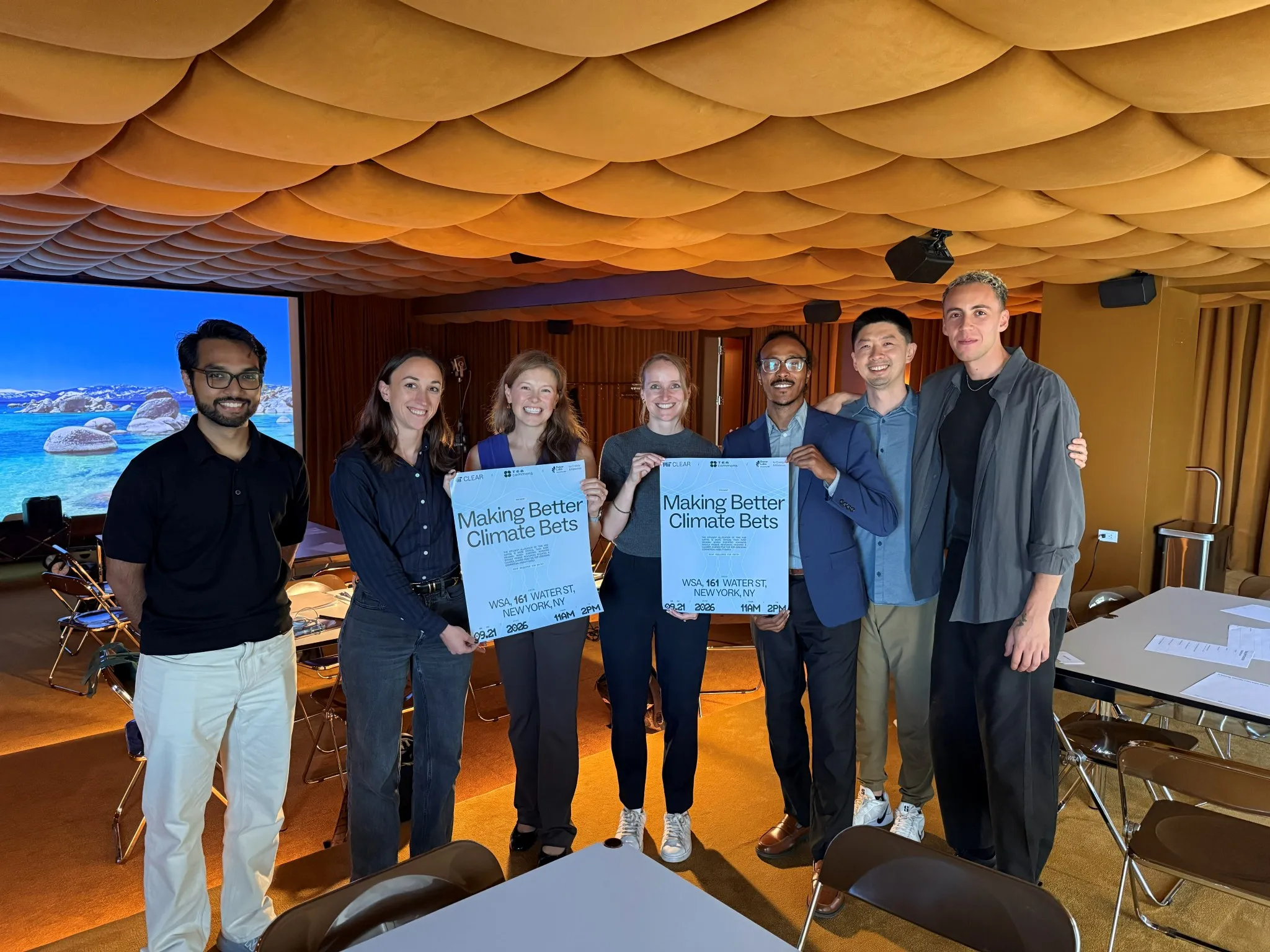
Photos and notes from our first big in-person TEA Commons convening, co-hosted with MIT CLEAR and Bakar Labs for Energy & Materials, produced with External Affairs.
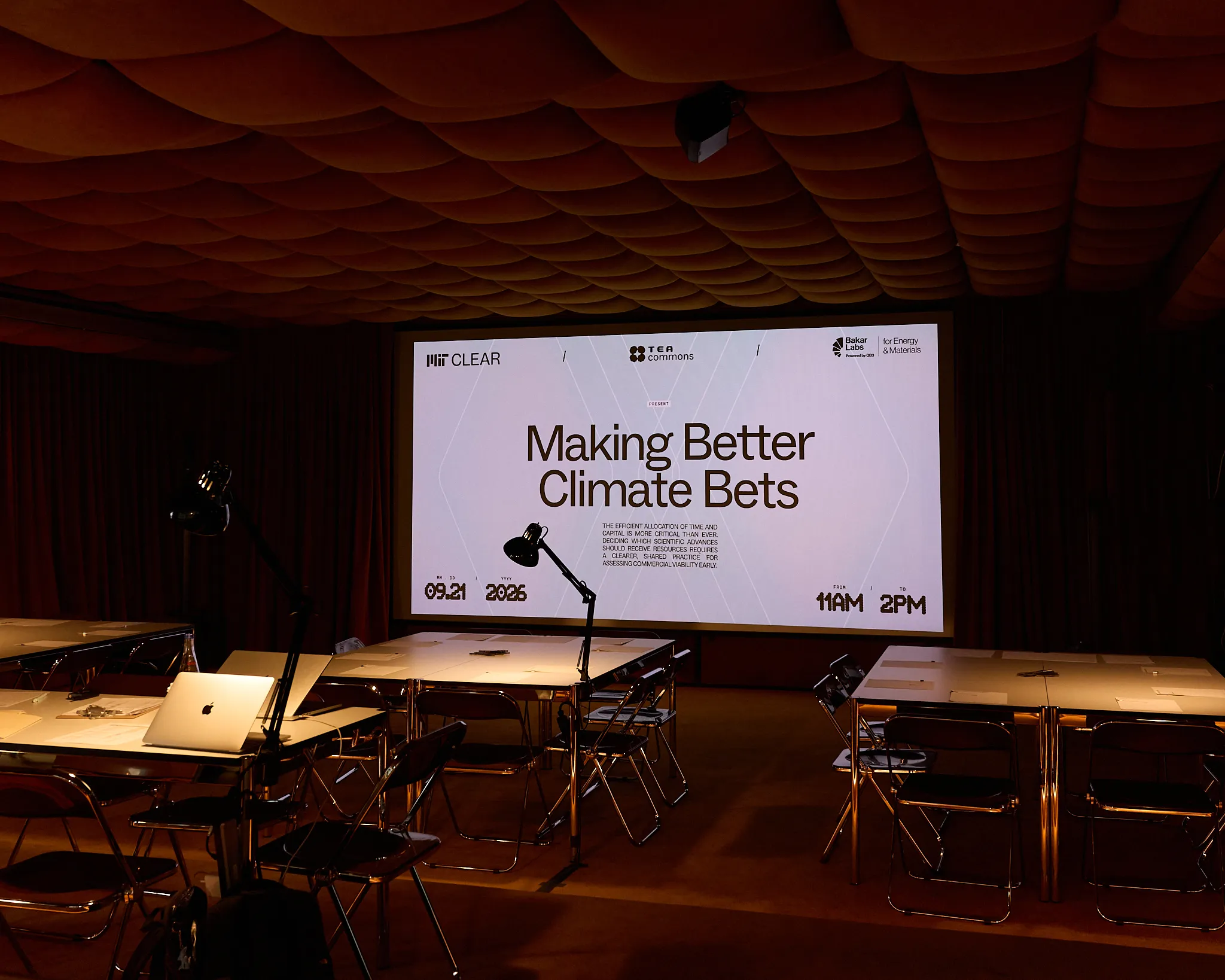
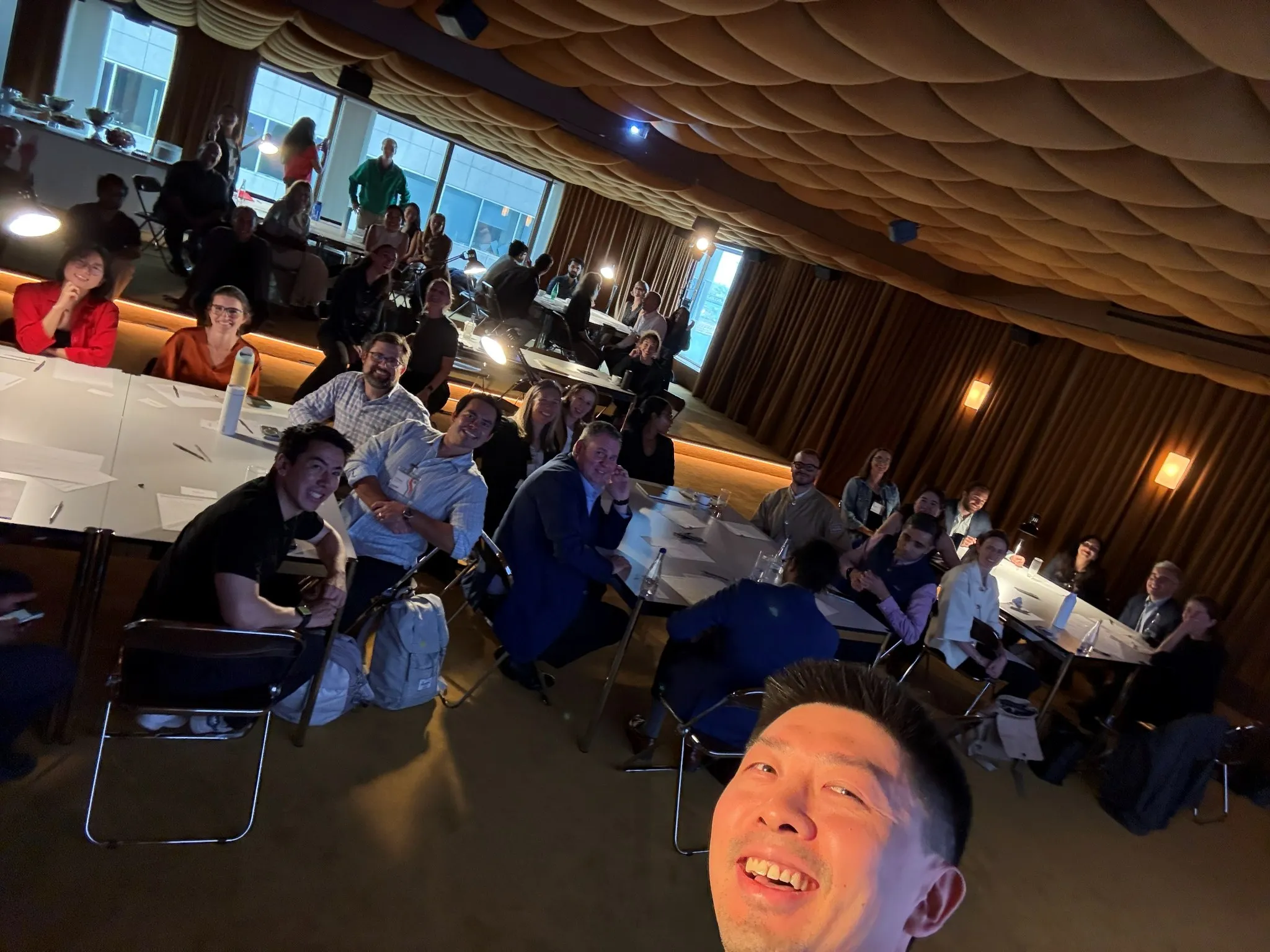
On the Monday of Climate Week, 40+ investors, funders, founders, researchers, and industry leaders spent a morning with us at WSA on Water Street, working through one question: when someone's making a bet on building & scaling climate technologies, where does the analysis actually come in?
Over the last few years of helping teams get technologies out of the lab, one thing keeps surprising (and bugging) us. Multi-year, multi-million dollar decisions still get made with little to no analysis behind them. For NY Climate Week, we brought together the people who build these analyses, who review them, and who fund them at the same tables, sharing & learning from each other.
- People in the room
- 40+
- Organizations
- 30+
- Tables
- 5
- Minutes of discussion
- 65
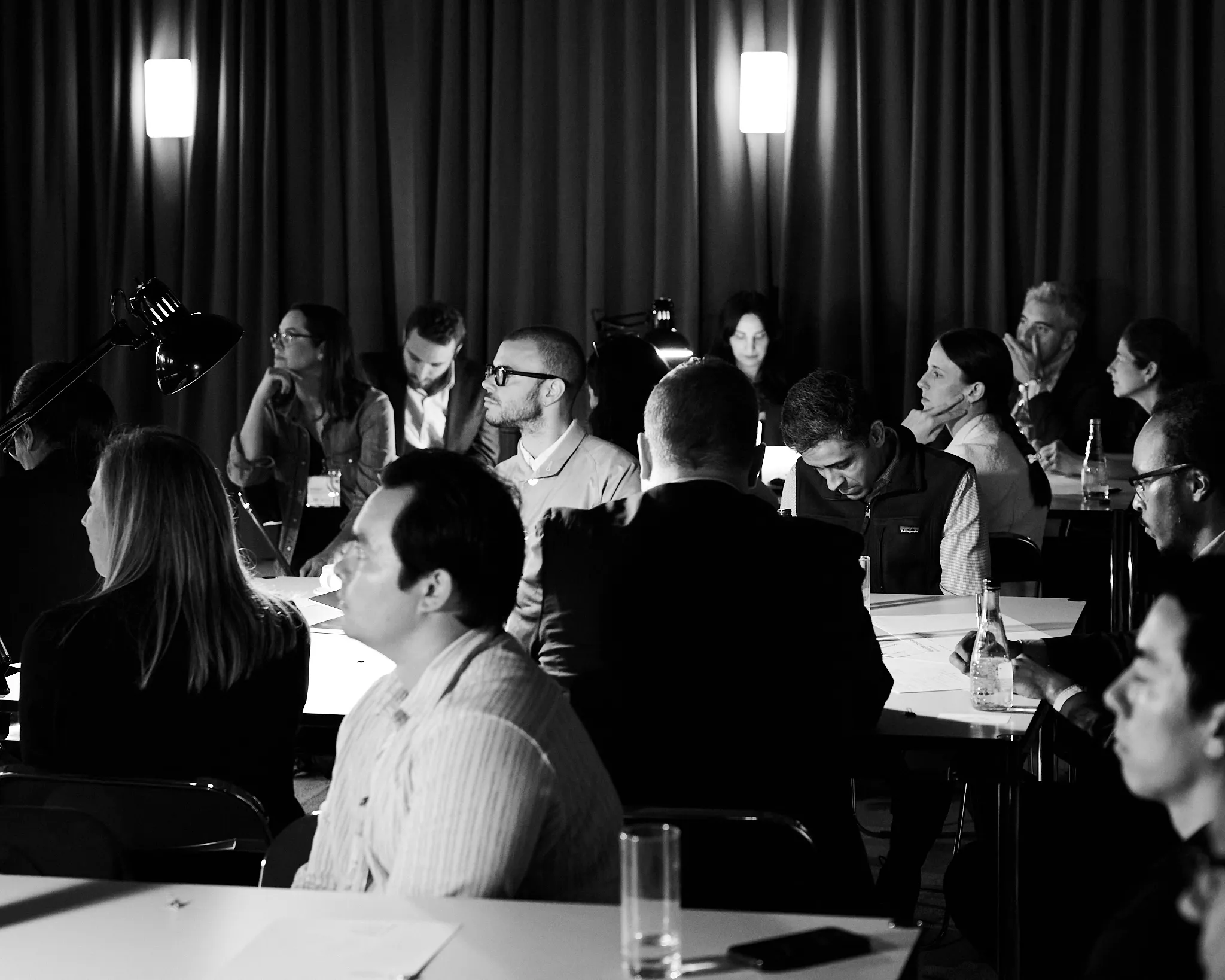
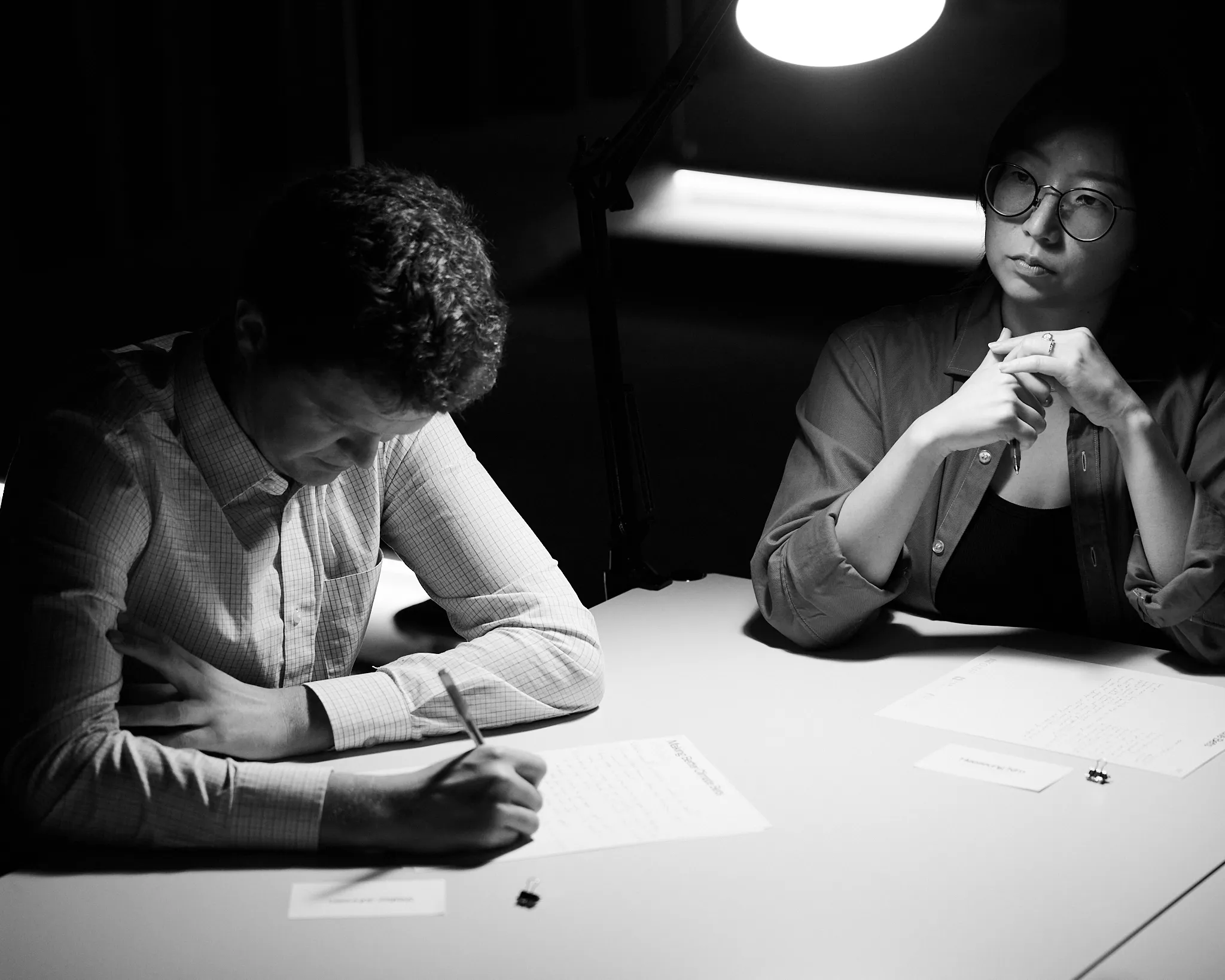
How do we maximize discussion & chit-chat?
Instead of the usual NY Climate Week panel, we wanted to seat folks by the kind of decision they own (building an analysis, trusting one, or using one) and ask each table to pick real decision-points and gaps and pull them apart.
External Affairs (who designed our new identity and ran a pilot event with us last year!) brought things to life: the vibes, the visual identity, and the event itself. Physical / tactile artifacts are always appreciated in today's world (like the table logs and decision cards), and a few people photographed them to take back to their own teams.
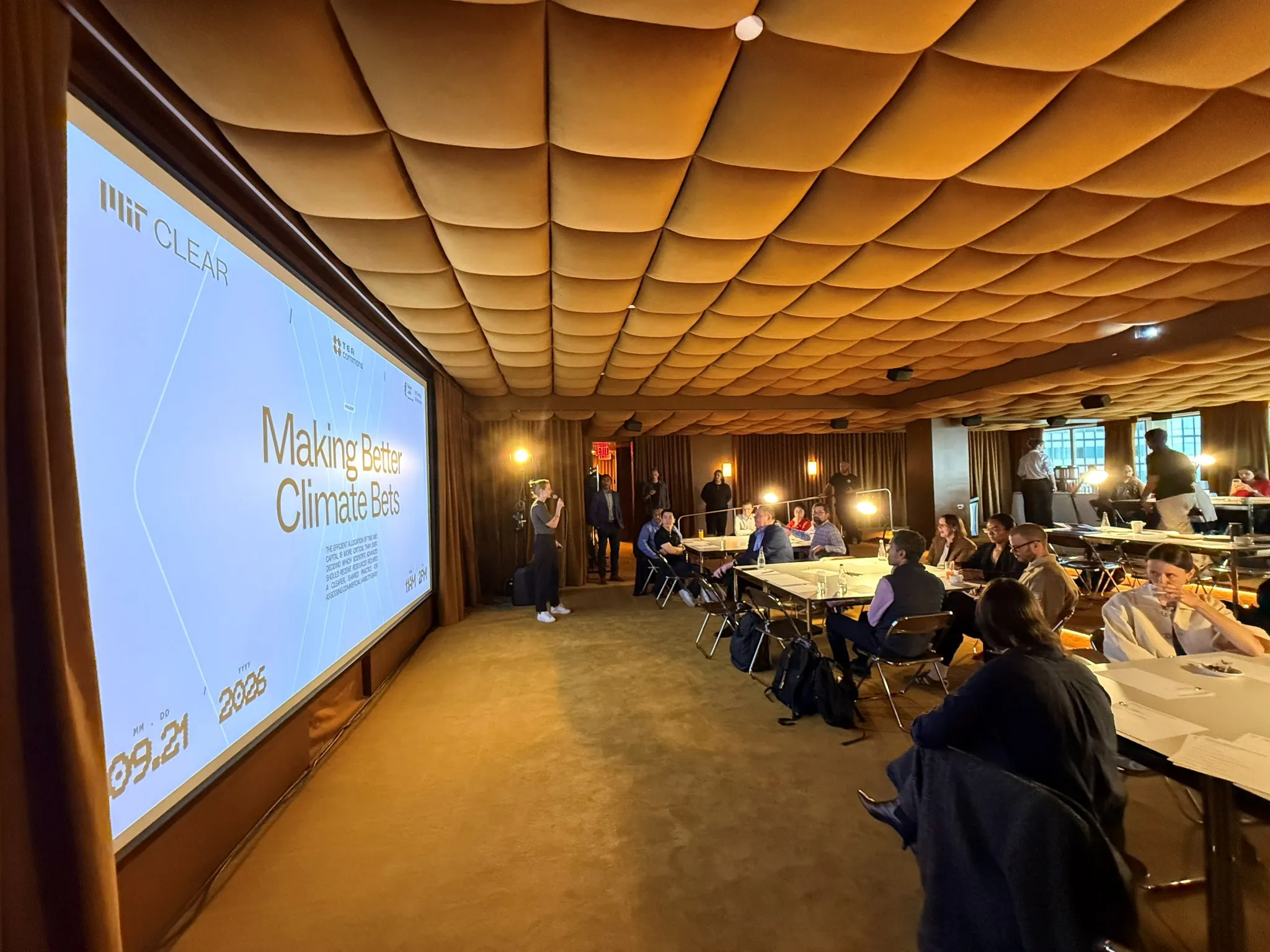
The agenda
(we did our best to stay on time!)
- 10:45am Coffee 30 min Coffee & hanging out.
- 11:15am Framing 15 min Why we're here, partner intros.
- 11:30am At the tables 65 min Meet folks at the table, then pick real-world decisions and debate gaps and what the ecosystem can do.
- 12:35pm Report out 15 min Three-ish minutes per table.
- 12:50pm Lunch
The discussion at every table
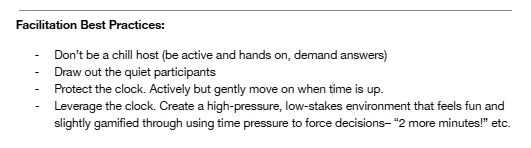
How do we get commercialization decisions to be more analytically driven throughout the journey?
From the facilitator guide
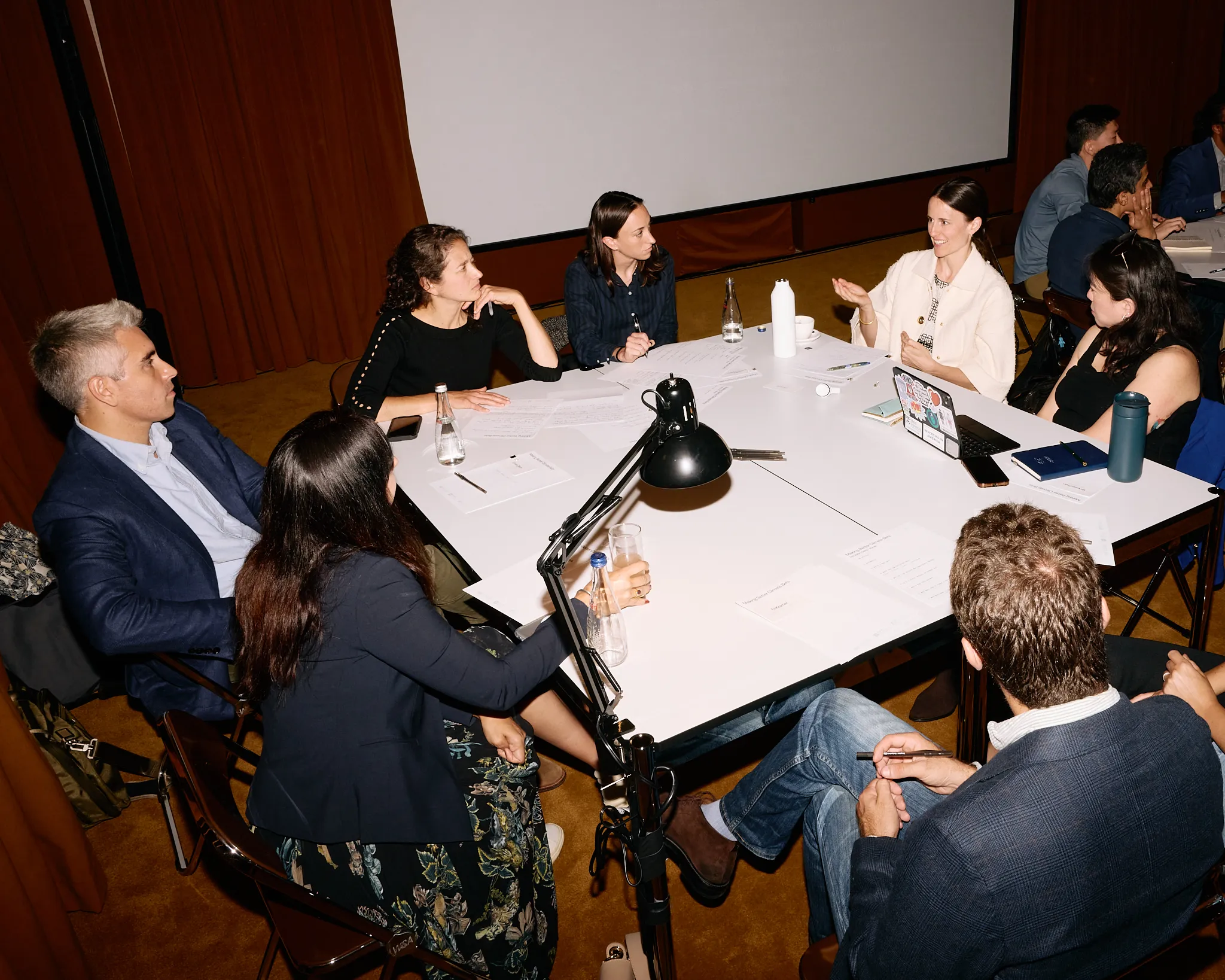
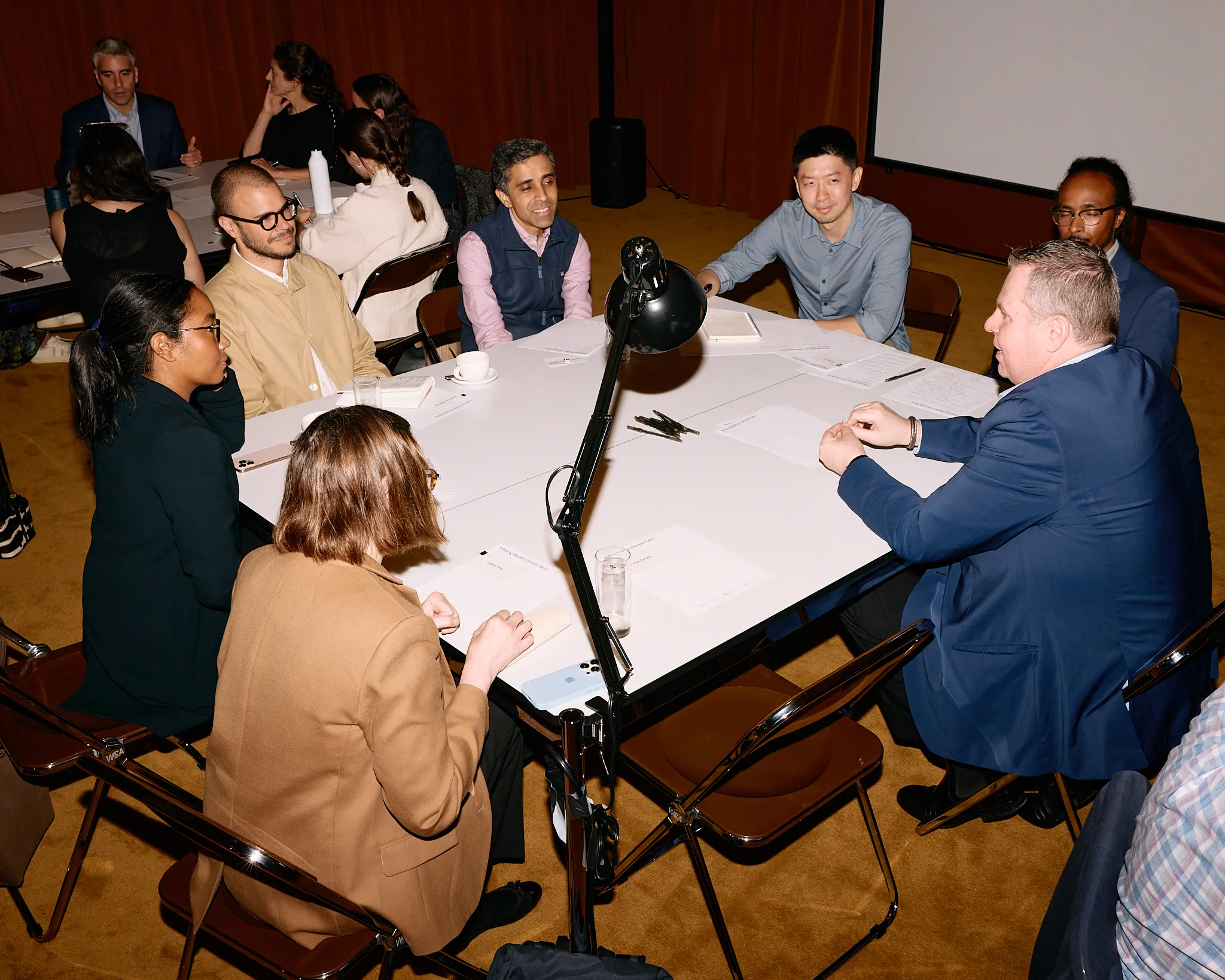
So much to say! So little time!
Some tables stuck more to the decision cards and question flow. Others had more free flowing conversations. Some focused on how we can better equip founders to build their first TEA; others went deep on why investors and funders don't quite fully rely on TEAs at early stages. We loved all of it!
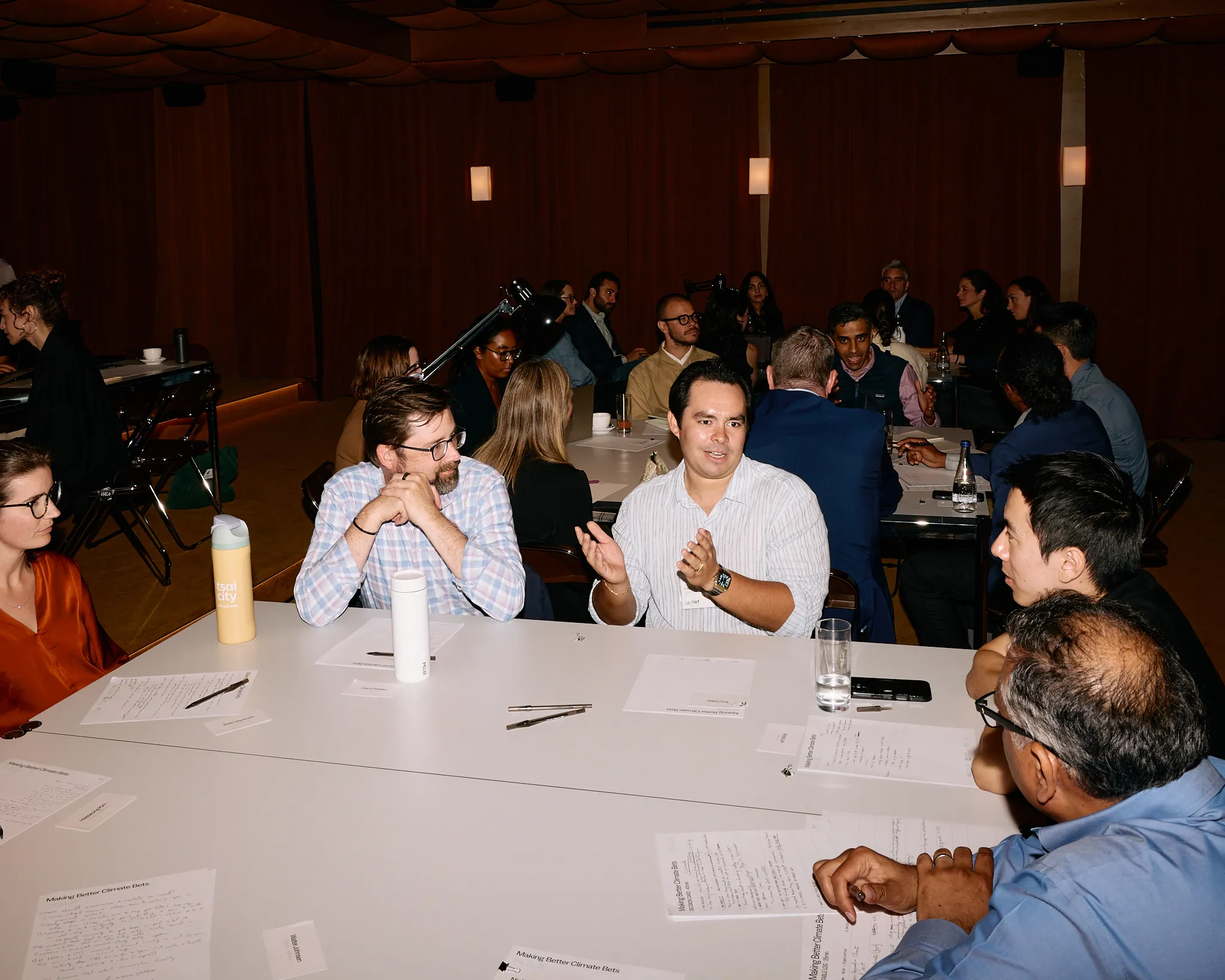
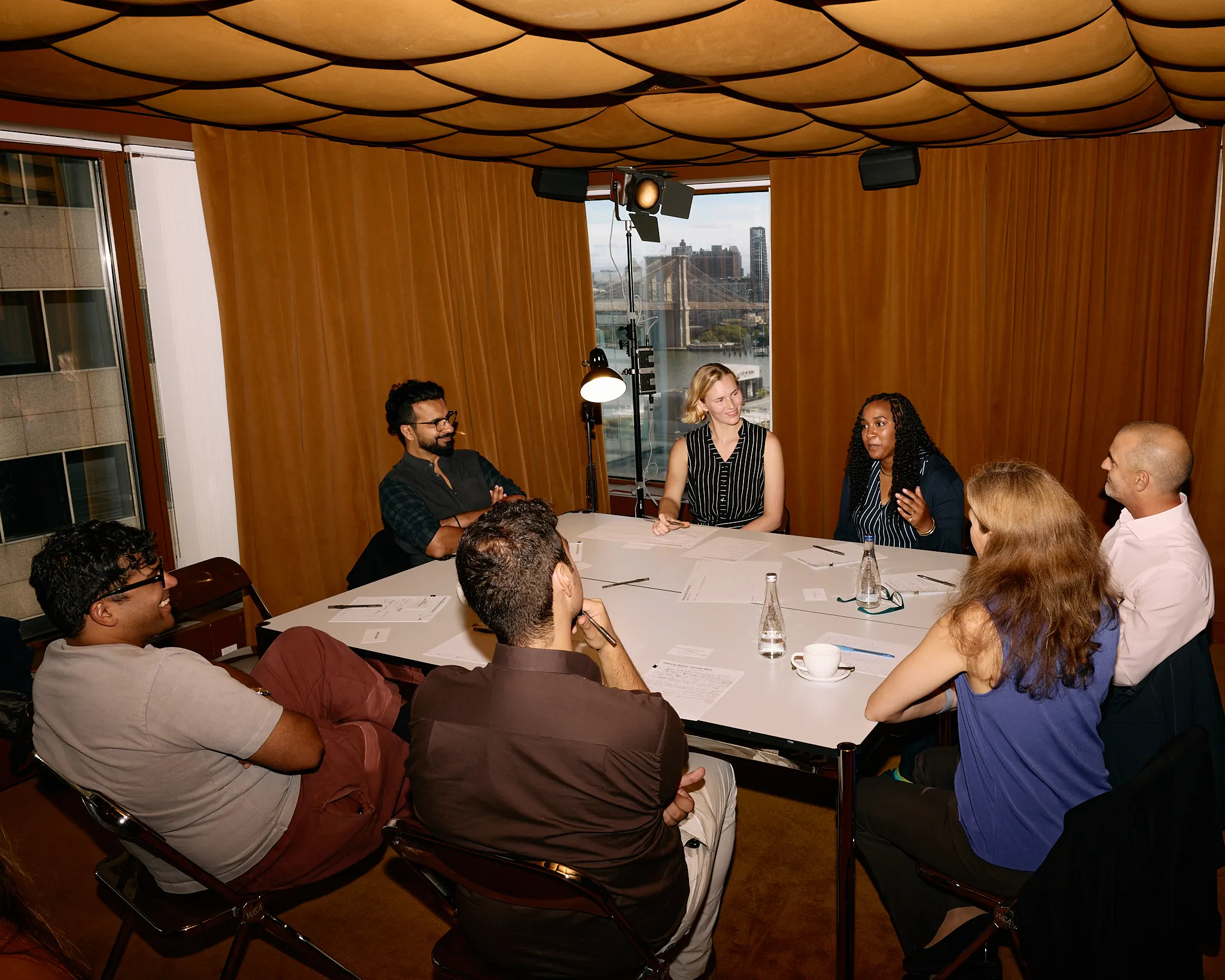
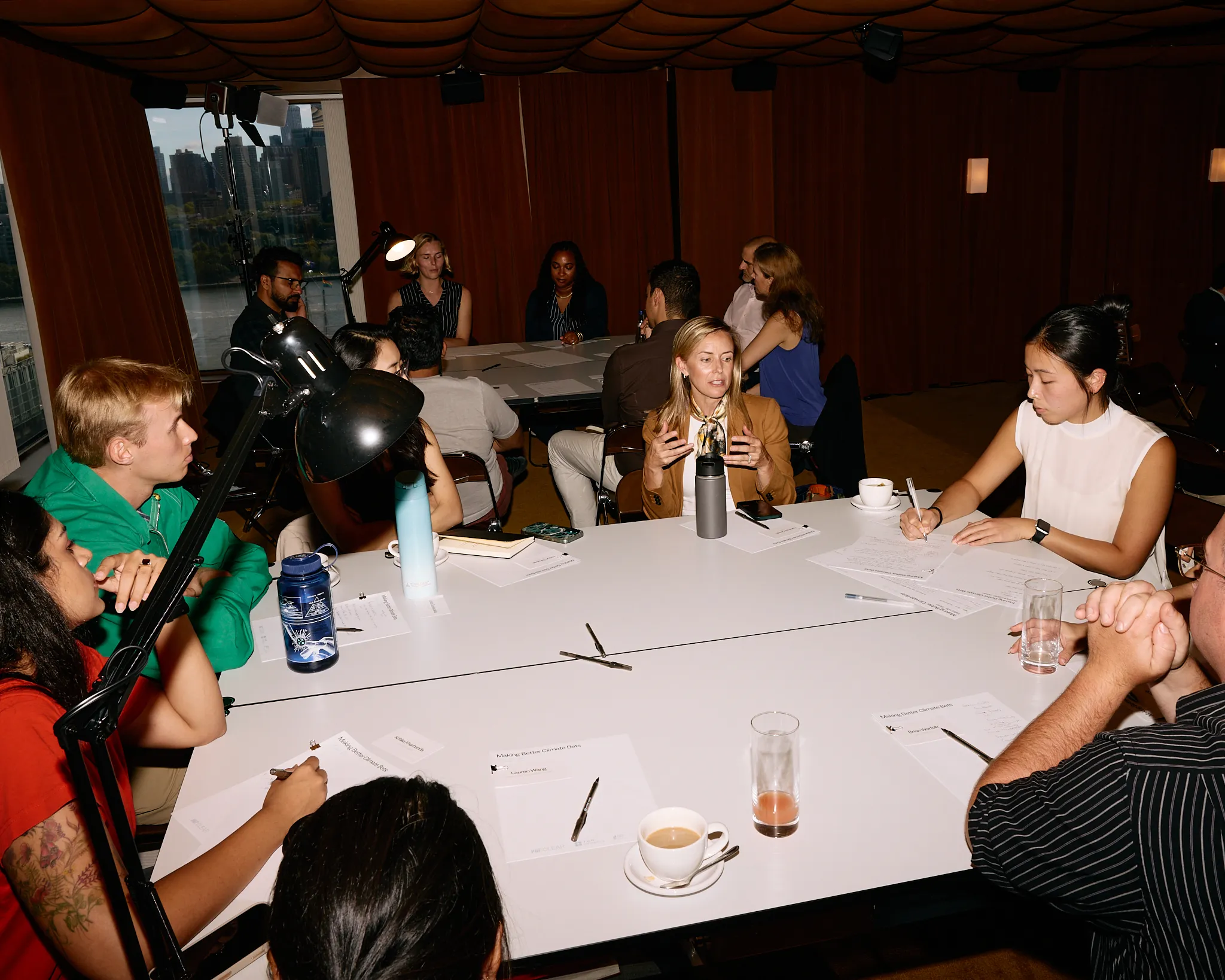
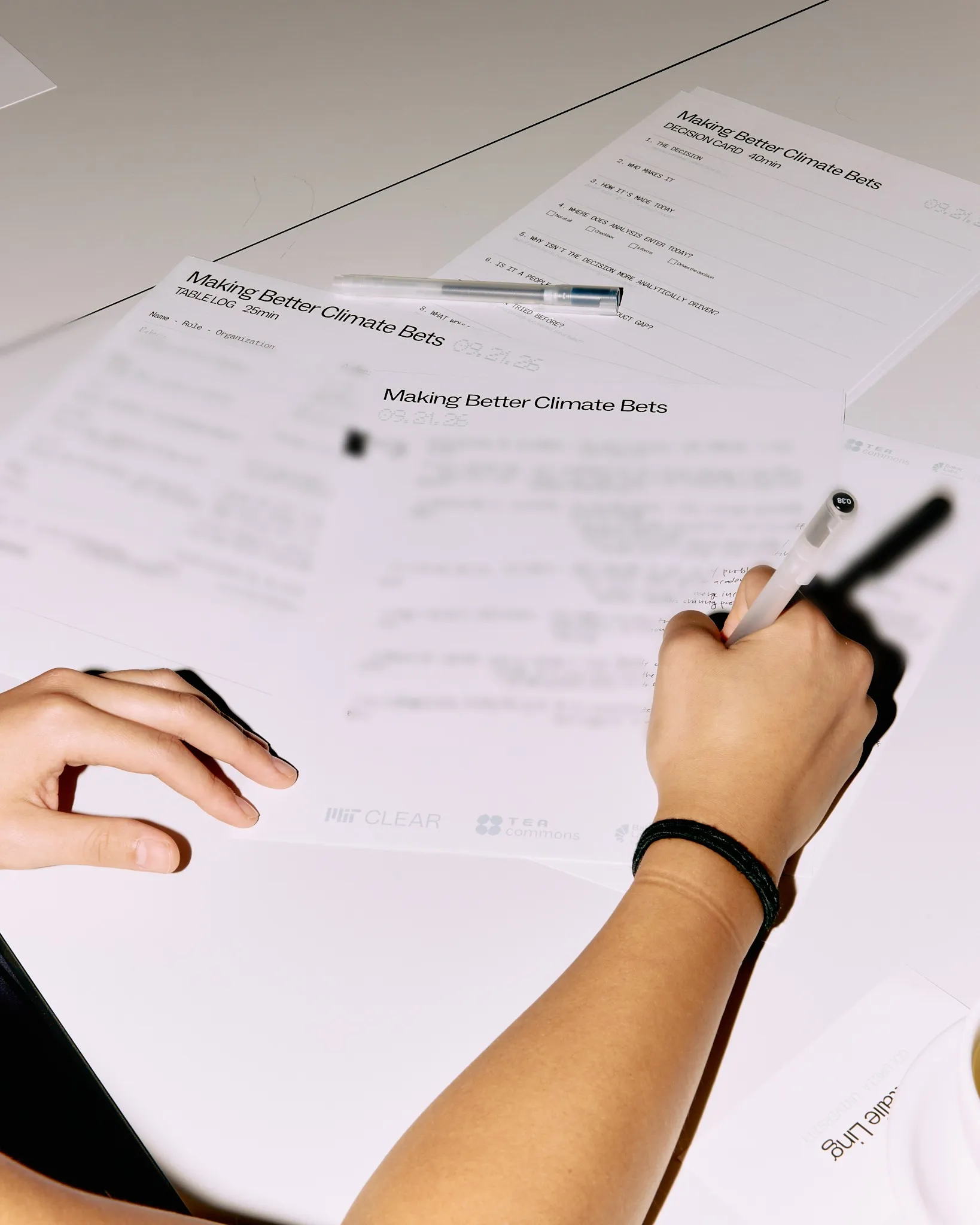
Thank you to our facilitators
- Apoorv Agarwal MIT
- Andy Loh Undaunted
- Ryan Taylor Bakar Labs
- Elsa Olivetti MIT CLEAR
- Melissa Zgola MIT CLEAR
- Natalie Ling Columbia University
- Emily Hagood Terradot
- Rosie Keller TEA Commons
- Teasha Feldman-Fitzthum TEA Commons
- Jesse Lou TEA Commons
Get in the weeds
- 01
Funders want to leverage TEA in decision-making, but still struggle at times to make sense of how it integrates
- Investors who do engage use it to read the founder: can they walk through it and defend their assumptions?
- If early TEAs were easier to test and compare, they'd carry more weight in technical reviews.
"TEA is often required for proposal applications but it's rarely used in the merit review process and final selections."
Luis Ortiz, ARPA-E - 02
The field wants a shared definition of good early-stage TEA
- Early TEA is directional: find the few drivers that matter and check the bar. One table's rough version: 10x yes, 20% maybe, 3% no.
- A TRL 2 company can't be judged like a TRL 9 one. Start lean, add nuance at each stage gate.
- The SAFE note standardized early-stage investing. Nobody could say who does that for TEA.
"Bringing together a community of experts around this important topic will be the driving force for progress."
Elsa Olivetti, MIT CLEAR - 03
Data and baselines are the bottleneck, because a TEA's value comes from comparison
- Promising programs have stalled because nobody quantified the incumbent, or the cost of doing nothing.
- The best data sits inside companies, who worry competitors could back-calculate from what they share.
- Two roles are open: a neutral party to broker industry data, and a field leader to set shared baselines.
- 04
Threads worth pulling
- For corporate buyers, market access can matter as much as cost: carbon border rules, sourcing requirements, export controls.
- One pilot serving several offtakers, instead of startups piloting again and again.
- A joint university and industry course, so the people building analyses and the people reviewing them share a mental model.
- Early-stage TEA as a short, standard set of questions.
Thanks to our partners who made it happen
- Co-host MIT CLEAR
- Co-host Bakar Labs for Energy & Materials
- Identity and production External Affairs
"Techno-economic analysis is an area where our innovators are still looking for additional support, so we plan on engaging in more programming like this in the foreseeable future."
Ryan Taylor, Bakar Labs
…and thanks to Ryan for nerding out with us about TEA for many years, especially in venture decisions!
Thank you to everyone who kicked off Climate Week with us.
- ARPA-E
- MIT CLEAR
- Apple
- Schmidt Family Foundation
- XPRIZE Foundation
- SOSV
- Renaissance Philanthropy
- Bakar Labs
- Newlab
- Guidehouse
- Henning Larsen
- Yale University
- Columbia University
- NYU
- UC Berkeley
- Penn Engineering
- MIT
- LabStart
- Undaunted
- Urban Future Lab
- Trellis Climate
- Fractal Climate
- Factor
- Datalab
- Change Forces
- AuraChrome
- Orogenyx
- Trust for Governors Island
- External Affairs
- TEA Commons
- A stealth critical minerals startup
Let's get to work!
A clear theme throughout was around establishing reliable and trusted resources: early-stage TEA case studies, shared industry baselines, or datasets for assumptions. We think this group is well placed to push on all these fronts, and we'd love to work on it with you. If you fund, review or build early-stage analysis, please reach out.